
The Little Forge shares practical, down-to-earth guidance on traditional blacksmithing and metalcraft for readers across the UK.
- 0123456789
- Angle Bd Abdelmoumen & rue soumaya, Résidence
- [email protected]
The Little Forge shares practical, down-to-earth guidance on traditional blacksmithing and metalcraft for readers across the UK.
 By James Hartley
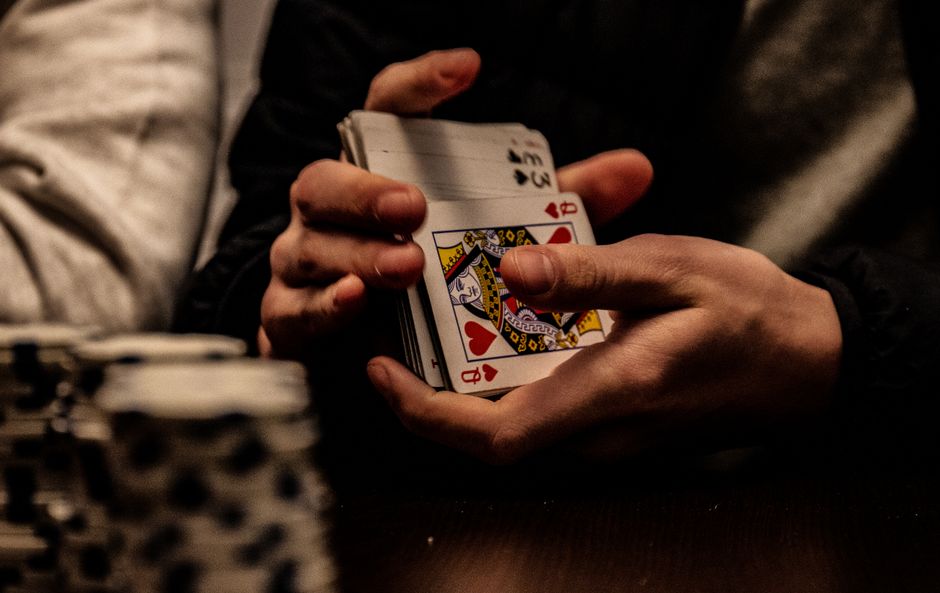
Most gamblers lose not because they pick the wrong slot or have bad luck at poker, but because nobody ever sat them down and explained the math. They chase jackpots on penny machines with 12% house edges, split tens at the blackjack table, and call every river card with a gutshot draw paying 4-to-1 on a 10-to-1 shot. The result is predictable. So let's fix that.
This isn't a lecture about quitting. It's a working guide to playing casino games, slots, and poker with your eyes open. You'll still lose sometimes — that's the business model — but you'll lose slower, play sharper, and probably enjoy it more. Further details are available through สล็อตเว็บตรง.
Every casino game has a built-in mathematical advantage for the house. That's not a conspiracy; it's how casinos pay rent. The problem is that the edges vary wildly, and most players never check.
That gap matters enormously over time. A $500 bankroll playing blackjack with basic strategy faces maybe $2.50 in expected losses per hour at a $10 table. The same $500 fed into a high-edge slot can evaporate in twenty minutes. Same money, radically different outcomes.
Slots are the most popular games in any casino, and also the least transparent. You will never see a machine's RTP printed on the cabinet in the United States. In some jurisdictions like the UK and parts of Europe, you might. Online, most reputable operators publish RTP on the game's info screen — usually between 94% and 97%.
Two practical points worth remembering:
Set a hard loss limit before you spin. Decide what you're willing to pay for the entertainment, treat it like a concert ticket, and walk when it's gone.
Poker is the only game in the casino where a skilled player can genuinely be profitable long-term. That's because you're not playing against the house — you're playing against other humans, and the house takes a rake. If you're better than the table, you win.
But "better" is doing a lot of work in that sentence. Key concepts that separate winning players from donators:
Online poker gives you tools — HUDs, hand histories, tracker software — that live players don't get. Use them. Review your sessions weekly. The winning grind is boring, unglamorous, and built on thousands of tiny correct decisions.
Sports betting gets treated like a prediction contest. It isn't. It's a pricing exercise. The only question that matters is whether the odds on offer imply a probability lower than the true probability.
If a coin flip pays out $2.10 on a win (decimal odds of 2.10, implying ~47.6% probability) and the true probability is 50%, you have value. If the book prices it at 1.90 (52.6% implied), you don't, and betting it long term loses money.
Three habits that separate sharp bettors from recreational ones:
Live betting in-play markets are especially vulnerable to overreaction. A team goes down 1-0 in the fifth minute, and its odds balloon. If you have reason to believe the market has overcorrected, that's where edges appear.
Everything in iGaming ultimately comes back to this: how much can you afford to lose, and will you actually stop when you hit it?
The players who last a decade in this space — as hobbyists or professionals — are almost never the ones who chase a hot streak. They're the ones who set limits, treat losses as operating costs, and don't let a bad night turn into a bad month.
Session limits are useful too. A common approach is a stop-win and a stop-loss: end your session if you're up 50% or down 50% of your session bankroll. That takes emotion out of the decision. You're not deciding whether to stay; the rule already decided for you.
And be honest about tilt. If you're chasing losses, betting bigger than usual, or clicking spin without thinking, you've stopped playing a math game and started gambling on tilt. Walk away. Come back tomorrow. The tables aren't going anywhere.
The gambling industry in 2025 is slick, colorful, and engineered to keep your eyes on the screen. Bright animations, near-miss visuals, autoplay buttons — none of it is accidental. Understanding the mechanics doesn't ruin the fun; it puts you in the driver's seat instead of the passenger seat.
Learn the edges. Learn the odds. Pick games where skill matters if you want an edge, and games where it doesn't if you want pure entertainment — just pay the cover charge knowingly. Whether you're spinning slots at 2 a.m., grinding a $1/$2 poker table, or sweating an in-play pre-match accumulator, the players who do best over the long term are the ones who know exactly what they're doing and exactly what it costs.


We are not gonna make spamming
