
The Little Forge shares practical, down-to-earth guidance on traditional blacksmithing and metalcraft for readers across the UK.
- 0123456789
- Angle Bd Abdelmoumen & rue soumaya, Résidence
- [email protected]
The Little Forge shares practical, down-to-earth guidance on traditional blacksmithing and metalcraft for readers across the UK.
 By Thomas Ashworth
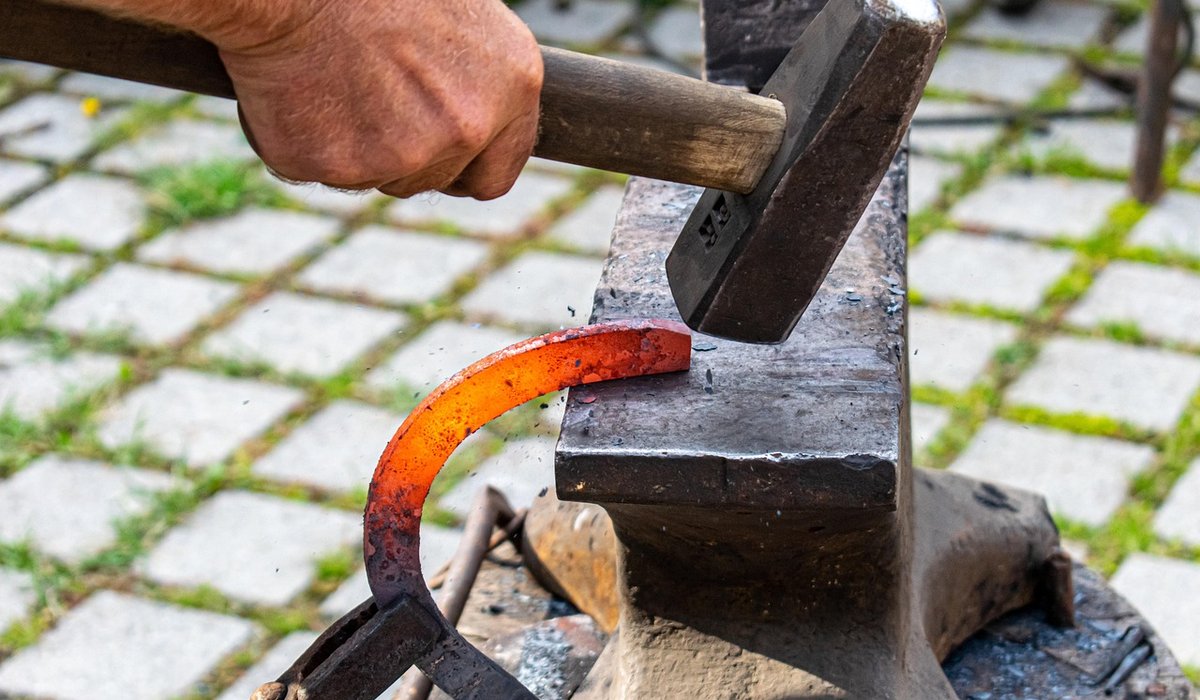
Before you even think about hand tools, you need two cornerstones: an anvil and a forge. A traditional London-pattern anvil weighing between 50 and 100 kg is ideal for a beginner. Look for one with a smooth face, a sturdy horn, and a hardy hole that takes standard tools. Avoid anvils with deep sway or chipped edges – they will make your work harder. Your forge can be solid fuel (coal or coke) or gas. A gas forge is cleaner and easier to control indoors, while a solid-fuel forge gives you a more traditional experience. Whichever you choose, make sure you have a safe, well-ventilated space and a sturdy vice bolted to a bench or stand. These items are not hand tools, but without them your hammer and tongs are useless.
A blacksmith’s hammer is an extension of the arm. For general forging, start with a cross-peen hammer weighing around 1 to 1.5 kg (2 to 3 lb). The cross-peen (also called a straight-peen) lets you draw out metal quickly, while the flat face is for smoothing and setting down. A ball-peen hammer is useful for riveting and texturing, but it is less versatile for heavy drawing. Buy a hammer with a hickory or ash handle, and make sure the head is securely wedged. Avoid cheap hammers with thick lacquer – you want to dress the face smooth with a flap disc so it does not leave marks. You will also want a lighter hammer, around 500 g, for detail work and for striking punches and chisels. Never use a hammer with a cracked handle or a loose head. Keep a few spare handles in your workshop.
Tongs are your hands when the metal is at forging temperature. You need at least one pair that fits the stock you use most. Flat-jaw tongs are the best all-rounder for square and flat bar. Bolt tongs have a curved jaw for round stock, and wolf-jaw tongs adjust to grip odd shapes. A good pair of tongs should close firmly without gaps and have a comfortable reign (the handles) that fits your hand. You can buy tongs from a blacksmith supplier or make your own from mild steel – making tongs is a classic beginner project. Always keep your tongs cool by dipping them in water, and never grip hot metal so tightly that you crush it. If the tongs slip, stop and adjust them – a piece of hot metal flying across the workshop is dangerous.
Punches and chisels let you cut, shape, and mark metal. A hot cut chisel is used for cutting metal while it is hot – it has a long, tapered blade and a handle you can hold. A cold cut chisel is for cutting cold metal, but it needs a much stouter edge and is best used with a sledgehammer. A centre punch makes a starting dimple for drilling, while a drift punch enlarges holes in hot metal. You will also want a hardy hot cut that fits in your anvil’s hardy hole – this is a chisel on a square shank. Keep all cutting tools sharp and cool them frequently in water. Never cut cold metal with a hot cut chisel, and always wear eye protection. A bolster plate or the hardy hole itself gives you a clean cut without damaging your anvil face.
Blacksmithing is hot, loud, and dirty. Before you strike your first blow, invest in proper safety gear. Eye protection is non-negotiable – use goggles or a full face shield. Ear defenders will save your hearing from the ring of hammer on anvil. A leather apron protects your body from sparks and scale, and steel-toe boots keep your feet safe from dropped metal. Wear leather gloves only when holding tongs or moving hot stock, never when hammering – a glove can catch on a hammer handle and cause a nasty accident. Keep a fire extinguisher and a first aid kit within reach, and make sure your forge area is clear of flammable materials. If you use a gas forge, install a carbon monoxide detector.
Once you have the basics, add a few small tools that make life easier. A wire brush removes scale, a half-round file smooths edges, and a quench tank (a metal bucket of water or oil) is essential for cooling tools and hardening steel. Callipers help you check dimensions, and a hardy fuller lets you draw out metal quickly. Buy second-hand where you can – car boot sales and online auctions often have good hammers and tongs. Most importantly, join a local blacksmithing group or take a taster course. Learning from an experienced smith will save you hours of frustration. Start simple: make a poker, a hook, or a set of tongs. The tools above will get you there safely and happily.


We are not gonna make spamming
