
The Little Forge shares practical, down-to-earth guidance on traditional blacksmithing and metalcraft for readers across the UK.
- 0123456789
- Angle Bd Abdelmoumen & rue soumaya, Résidence
- [email protected]
The Little Forge shares practical, down-to-earth guidance on traditional blacksmithing and metalcraft for readers across the UK.
 By Rebecca Green
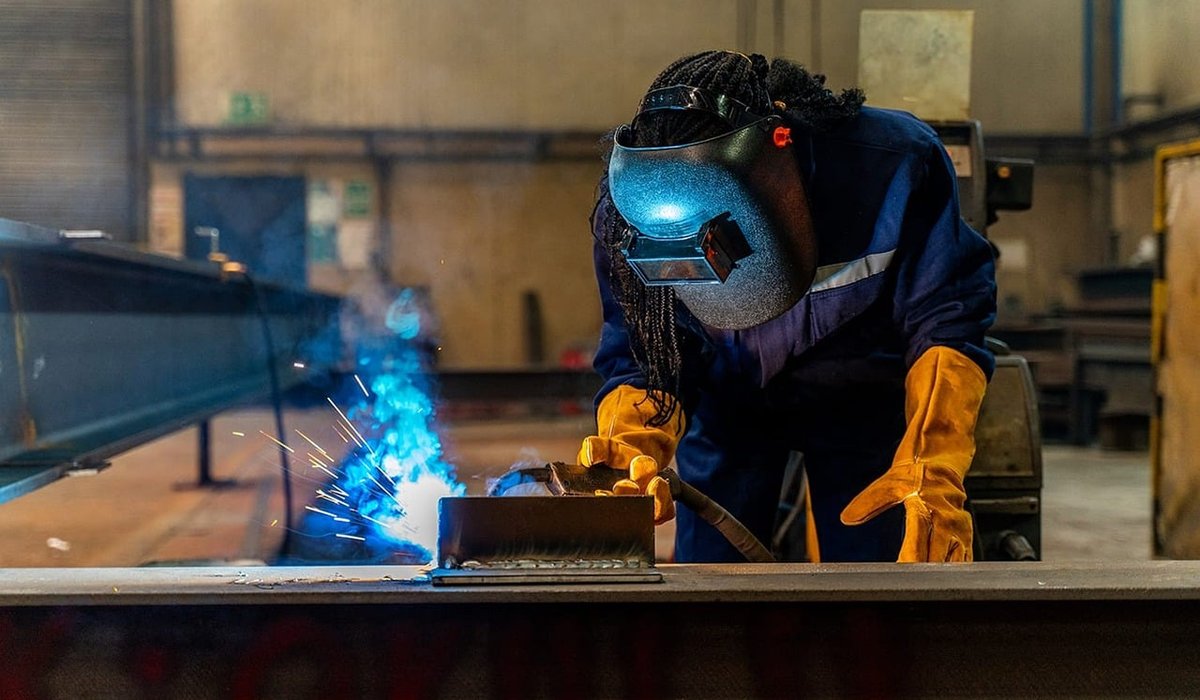
A fire poker is one of those projects that quietly teaches you almost everything a blacksmith needs to know. You will draw out a taper, control your heat, twist a section cleanly, bend a curve that actually looks deliberate, and finish the steel so it survives years beside a hearth. It is also genuinely useful, which matters when you are deciding what to make on a wet Saturday afternoon. The whole job takes most people two to three hours at the forge, and you can complete it with a modest set of tools and a single length of mild steel.
Start with a bar of mild steel roughly 600 to 700 mm long. Round bar of 10 or 12 mm is the easiest to twist neatly, though 10 mm square bar gives you crisp facets that catch the light beautifully once twisted. Avoid anything galvanised, painted or of unknown origin — zinc fumes are genuinely nasty, and mystery alloys will fight you every step of the way.
Before you light the forge, gather the following:
Begin at the business end. Bring the last 100 to 125 mm of the bar to a bright orange heat and lay it across the anvil with the tip just over the far edge. Hammer from the shoulder of the taper towards the point, not the other way around — working this way pushes metal forward rather than thinning it unevenly. Give the bar a quarter turn between blows so the taper stays symmetrical, and use lighter hammer strokes as the metal thins.
Aim for a long, gradual taper ending in a slightly blunted point. A needle-sharp tip will curl over the first time it is prodded into a hot grate, so leave a millimetre or two of thickness at the end and round it off. Once the taper is formed, cool the bar slowly in air rather than quenching it, then tidy the shape with a few strokes of the file while it is still warm but no longer glowing.
The twist is the part everyone notices, so it deserves care. Decide where you want it — usually 150 to 200 mm down from the handle end — and heat that entire section evenly to a bright yellow-orange. The heat must be uniform along the whole length; a cold patch in the middle will shear rather than twist.
Grip one end firmly in the vice, or hold it with tongs braced against your body, and apply the twisting wrench to the other. Turn steadily and slowly, keeping the twist square rather than letting it spiral unevenly. One full revolution per 10 to 12 mm of length gives a handsome, open twist; tighter spacing looks busier but can pinch the metal. If the colour drops below a dull red, stop immediately and return it to the fire. Twisting cold steel is the quickest way to ruin a good poker.
With the twist complete, heat the very top 75 mm and bend it over the horn of the anvil into a hook or shepherd's crook — this is what lets the poker hang neatly on a stand. Work the bend in stages, reheating as needed, and bring the tip back on itself into a small scroll if you fancy a traditional touch. Keep the curve generous rather than tight; a cramped hook looks pinched and will not sit well.
Check the poker for straightness by sighting along it from the point end, and correct any drift with gentle taps while the shaft is warm. A poker that runs true from tip to hook simply feels better in the hand.
When the shaping is done, brush the whole piece vigorously with a wire brush while it is still warm. This removes loose scale and leaves the surface smooth and slightly satin. File any sharp edges around the hook and the point, then bring the steel to a dull, even heat — around 200°C, where it just begins to show a straw colour — and rub it all over with beeswax or linseed oil. The wax melts into the surface, darkens it to a deep, warm brown-black, and gives real protection against rust.
Let the poker cool naturally, then buff it with a cloth. It will pick up a little surface rust over time, but a rub with oil and a piece of fine wire wool now and then keeps it looking well. Stand it by the hearth and you have a tool that will outlast most of what you could buy, made with your own hands from a single bar of steel.


We are not gonna make spamming
