
The Little Forge shares practical, down-to-earth guidance on traditional blacksmithing and metalcraft for readers across the UK.
- 0123456789
- Angle Bd Abdelmoumen & rue soumaya, Résidence
- [email protected]
The Little Forge shares practical, down-to-earth guidance on traditional blacksmithing and metalcraft for readers across the UK.
 By Eleanor Whitfield
For centuries, the ringing of the anvil was as familiar as the church bell in a British village. Long before factories and motorways, nearly every community had its own blacksmith. He was a maker, mender, and occasional miracle-worker, turning lumps of wrought iron into the tools and fittings that kept daily life moving. The smithy itself was often a low, dark building near the green or crossroads, its door open to the road, its interior glowing orange. The trade stretched back to the Iron Age, but the village blacksmith as we picture him – leather apron, strong arms, a patient manner – came into his own in the medieval period and remained a fixture well into the twentieth century.
The blacksmith’s work was astonishingly varied, and much of it was ordinary rather than ornamental. A typical week might involve:
A skilled smith could make a set of four horseshoes in about an hour, and a single nail in under a minute. He knew the needs of every farmer, carter, and householder within walking distance. When the railway arrived or a motor car broke down, it was often the smith who was called first.
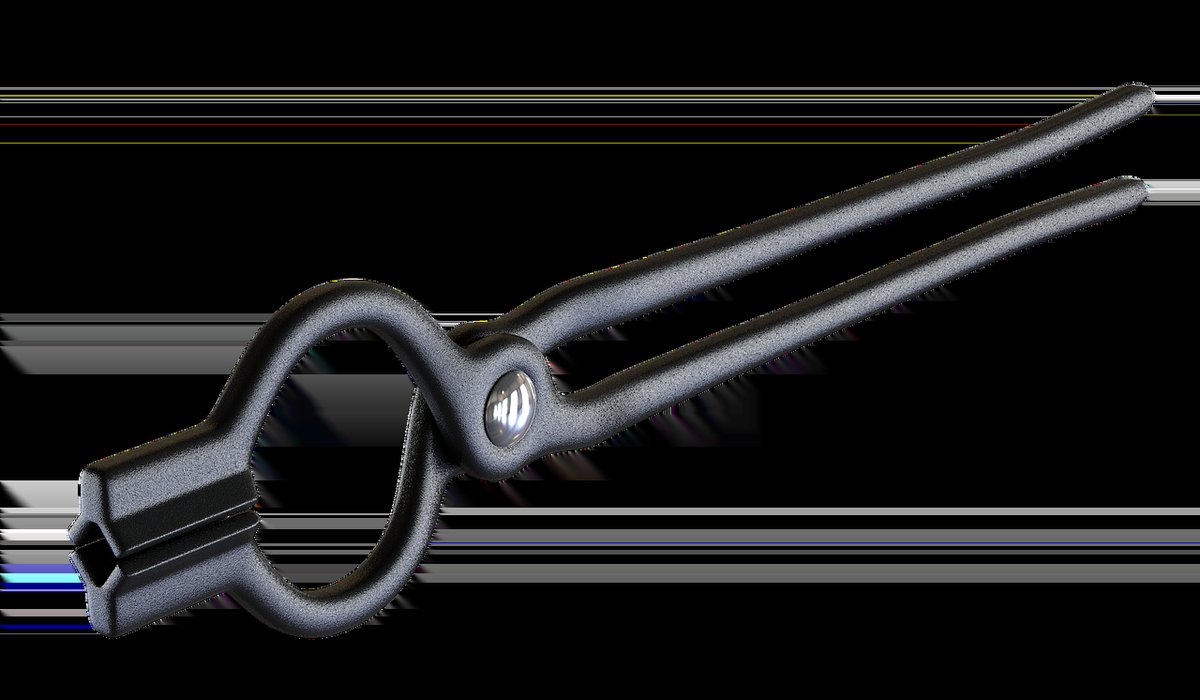
The blacksmith’s kit was simple but demanding. At the centre stood the forge, fuelled by charcoal and later coke, with bellows to raise the heat. The anvil – usually a hundredweight or more of wrought iron or steel – provided the working surface. Around it hung tongs, hammers, fullers, punches, chisels, and a swage block. The smith read the metal by colour: a cherry red for bending, bright orange for drawing out, yellow-white for forge welding. Forge welding, where two pieces of iron are hammered together at welding heat, was a particular mark of skill. So was upsetting, thickening a bar by hammering its end, and tempering, heating and quenching a tool to give it the right balance of hardness and toughness. Apprenticeships lasted seven years, and many a young lad began by blowing the bellows and sweeping the floor.
Not everything was utilitarian. The village smith also produced elegant ironwork: gates, railings, weather vanes, sign brackets, boot scrapers, and candle holders. Church screens, memorial crosses, and village signs often carried his touch. Regional styles developed – the sturdy scrollwork of the Sussex Weald, the delicate twists of Welsh valley smiths, the robust finials of the Scottish Borders. A smith might spend winter months on decorative commissions, then turn to practical repairs in spring. The distinction between blacksmith and farrier was not always sharp; many did both, though a farrier specialised in hooves while a blacksmith worked general iron. Together they kept horses sound and carts rolling.
The smithy was more than a workshop. It was a social hub, a place to swap news, argue politics, and wait for a horse to be shod. The blacksmith himself was often a respected figure – literate enough to keep accounts, strong enough to command attention, and trusted with everything from mending a kettle to pulling a tooth. He earned better wages than a farm labourer, though the work was hot, dirty, and punishing on the body. As the Industrial Revolution gathered pace, factory-made nails, hinges, and tools undercut village trade. Railways and then motor vehicles reduced the need for horses. By the early twentieth century, many smithies had closed, their anvils sold for scrap or left to rust.
Yet the village blacksmith never quite disappeared. Some smiths became agricultural engineers, farriers, or general metalworkers. Others kept the old skills alive, and today a new generation is rediscovering the forge. Heritage centres, working museums, and small independent forges still ring with hammer blows, proving that the craft has a future as well as a past. The tools have changed little: a good anvil, a hot fire, and a steady hand. Whether making a garden gate or a set of hinges, the village blacksmith reminds us that useful things can also be beautiful – and that a community is built as much from iron and care as from stone and timber.


We are not gonna make spamming
