
The Little Forge shares practical, down-to-earth guidance on traditional blacksmithing and metalcraft for readers across the UK.
- 0123456789
- Angle Bd Abdelmoumen & rue soumaya, Résidence
- [email protected]
The Little Forge shares practical, down-to-earth guidance on traditional blacksmithing and metalcraft for readers across the UK.
 By James Hartley
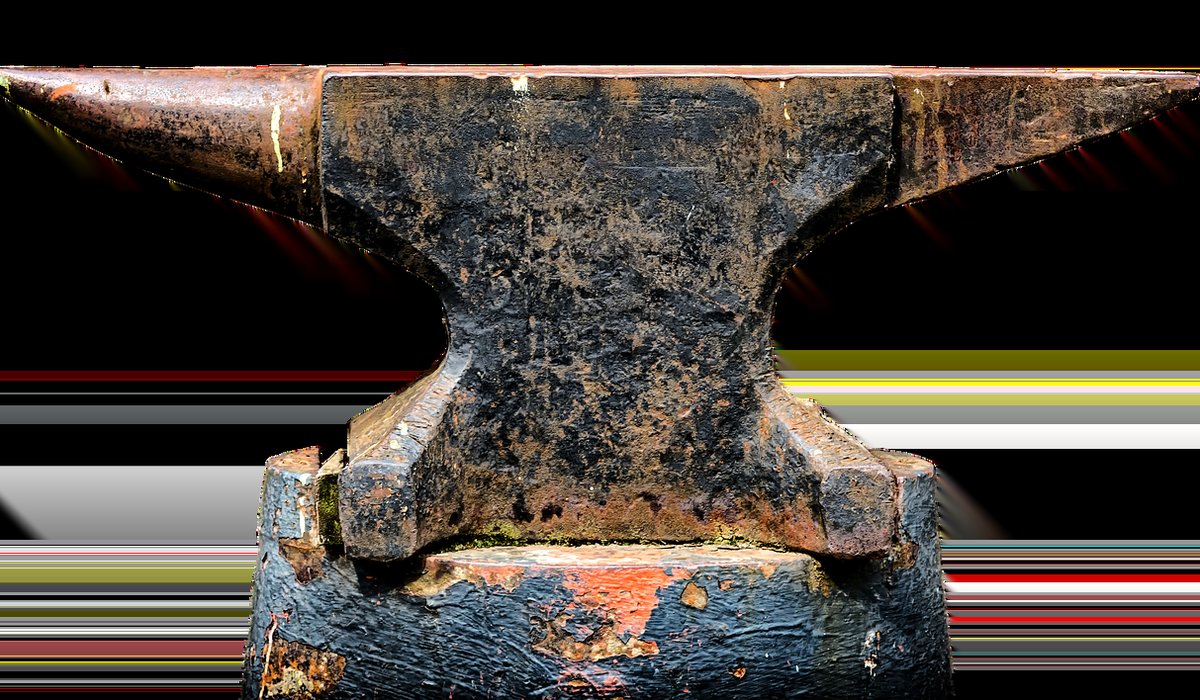
An anvil is usually the heaviest thing a home smith ever buys, and the temptation is to chase size for its own sake. Before you part with money, picture the work. If you are making hooks, bottle openers, fire irons, gate latches and the odd bit of straightening, almost any sound anvil between 40 kg and 70 kg will serve you for a lifetime. If you plan to upset heavy stock, punch thick material or work with a striker, more mass helps.
Think about where it will live, too. A shed or garage with a concrete floor is ideal. A wooden floor will sag and flex under a heavy anvil and rob you of energy. And consider the noise: a good anvil rings like a bell, and neighbours notice. A bed of sand under the stand or a strip of roofing felt between anvil and stump takes the worst of the ring out without affecting the rebound.
As a rough rule, you want about fifty times the weight of your hammer behind the blow. A 1 kg hammer is happy on a 50 kg anvil; a 2 kg sledge wants something nearer 100 kg because you are hitting harder and the anvil must absorb that without dancing.
Old British anvils are stamped in hundredweight, quarters and pounds, so "1-2-14" means 1 cwt (112 lb) plus two quarters (56 lb) plus 14 lb, or 182 lb in total, roughly 83 kg. Learn to read the stamp before you agree a price; sellers often quote the first number only.
Most old British anvils have a wrought iron body with a hardened steel face welded on top, sometimes with a steel horn and heel as well. That is exactly what you want. The cast iron imitations to avoid are usually obvious once you know the signs. They have smooth, sharp-edged sides, a thin top plate, a hollow underside, no maker's stamp and no handling holes in the base. Strike one and you get a dull thud rather than a ring, and the edges crumble under a hammer. Walk away.
Look for handling holes in the feet or waist, a slightly irregular hand-forged silhouette, and a visible line where the steel face meets the body. That line is where trouble hides, so examine it closely.
Bring a steel ball bearing, about 25 mm across, and drop it from roughly 25 to 30 cm above the face. On a healthy anvil it should bounce back most of the way, roughly 60 to 80 per cent of the drop height. Test in several places: the middle, both sides, over the heel. A soft spot is a warning; a dead patch usually means a crack or a delamination under the surface. A face that dents under a hammer has been overheated, ground thin or never properly hardened.
Do this with the anvil at normal temperature. A freezing cold anvil reads deader than it really is, and a warm one flatters itself.
Tap the face with a hammer and listen. A clear, sustained ring suggests the face is soundly welded and uncracked. A dull thunk suggests cast iron, a crack, or simply a badly seated anvil on soft ground, so never judge on sound alone.
A small magnet is more reliable. Run it slowly along the line where the face meets the body, and along the heel under the hardy hole. Over sound iron it slides smoothly. Where there is a crack, it will drag or hitch as the field drops away. Repeat on all four sides.
Take a small hammer, a ball bearing, a straight edge, a wire brush and a magnet. View the anvil in daylight, brush off loose rust, and stamp the price firmly in your mind before you arrive. In Britain, usable anvils generally change hands somewhere between £2 and £6 per pound of weight, with clean, well-stamped examples at the top of the range and chipped workhorses below it. A rough but sound 60 kg anvil is still a working tool, not a bargain to be sneered at.
Walk away from anything that fails the rebound test or shows a crack. There is always another anvil, and a bad one will follow you home for years. If you are unsure, photograph the face, the edges and the base, and ask an experienced smith or your local blacksmithing group for an opinion. Buying from someone who forges regularly is often better value than saving twenty pounds on an unknown lump.


We are not gonna make spamming
